Could Prediction Markets Break into the United Kingdom Gambling Industry?
-
 Matt Sinclaire
- Edited
- 3 minutes
Prediction markets, long treated as a fringe experiment inside cryptocurrency circles, have rapidly matured into one of the most disruptive forces in the United States’ digital wagering economy. Now, their accelerating growth is prompting significant questions about what might happen if these platforms attempt to enter the United Kingdom, one of the world’s most tightly regulated and commercially powerful gambling markets.
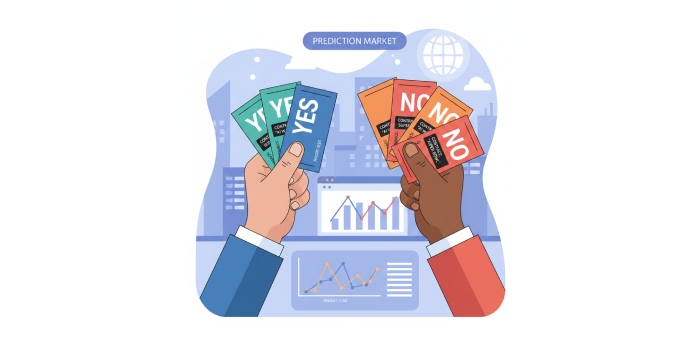
At their core, prediction markets operate like hybrid financial exchanges. Users place binary “yes” or “no” positions on real-world events, ranging from political outcomes and economic data to weather patterns and sports fixtures. Platforms such as Polymarket and Kalshi do not earn money when users lose. Instead, they take small commissions on high-volume trading, effectively transforming speculation into a liquid marketplace that treats future events as tradeable assets. The model has proven extraordinarily attractive.
Eye-Catching Market Developments
During the 2024 United States presidential race, more than three and a half billion dollars flowed through Polymarket alone. Meanwhile, Kalshi has secured major partnerships, including a political data collaboration with CNN, and retail-investment giant Robinhood reports that prediction markets have become its fastest-growing product category.
Although British users cannot access Polymarket, Kalshi, Robinhood, or Truth Predict due to licensing, identity, and regulatory barriers, the expansion is hard to ignore. If these markets ever received United Kingdom approval, they would immediately compete against well-regarded industry giants.
However, entry into Britain would not be straightforward. United Kingdom regulators have historically treated any event-based wagering as gambling, regardless of branding. United Kingdom authorities would likely classify them squarely under the Gambling Act. That involves triggering the full weight of licensing requirements, affordability checks, and consumer-protection obligations.
The Complexities
The Financial Conduct Authority’s stand on potential expansions is not clear, and the Gambling Commission remains cautious. Nevertheless, the scale of the growth has raised new questions about whether Britain’s gambling framework is prepared for platforms that behave halfway between crypto exchanges and bookmakers.
Prediction markets also introduce another complication. They generate highly accurate data. Operators such as Kalshi and Polymarket outperform polling firms in forecasting political and economic outcomes. If these markets do eventually come to the United Kingdom, their influence could extend far beyond gambling, shaping media coverage, political campaigning, and even corporate risk strategies.
For now, the United Kingdom remains a spectator. Whether regulators embrace them as innovation or classify them as traditional gambling will likely determine how disruptive this new wave becomes.
